
42 Wonders of
Our Night Sky
Forty-two wonders from the book. Fourteen films to take you closer. Follow your curiosity, explore the images and compare my ratings.
Created by Damon Scotting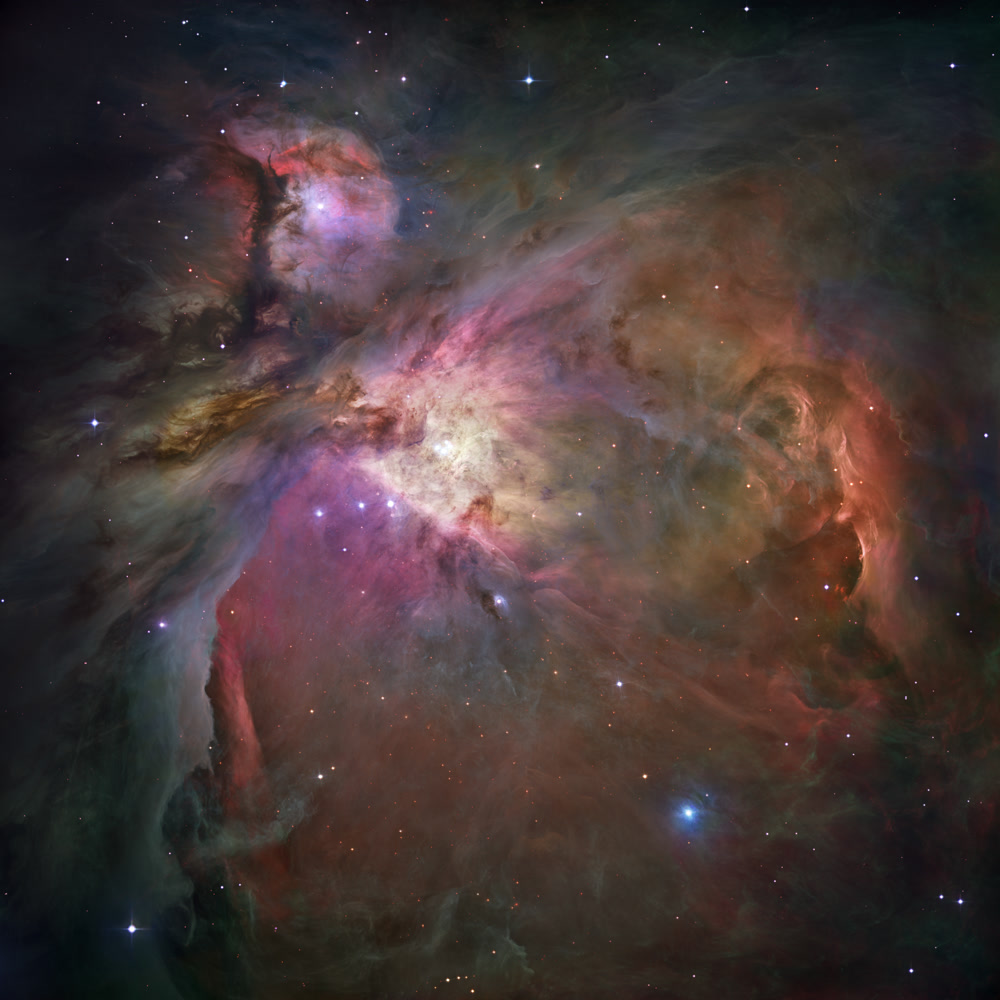
Orion Nebula
A massive stellar nursery visible to the naked eye.
Beauty
Power
Mystery
One of the 14 published films.
Two wonders. Four perspectives.
Compare my original Beauty, Power, Mystery and Overall ratings. Every score is out of 100.
Beauty
Power
Mystery
Overall
Where will you wander?
Choose a photograph. Follow a rating. Find a new favourite.
All 42 wonders
No wonders match that search.
Your next chapter is waiting.
Keep exploring in 42 Wonders of Our Night Sky, with finding charts, seasonal guidance, ratings and activities. Or make the collection your own on WonderWall.
Image credits for all 42 wonders
Crab NebulaNASA, ESA, J. Hester & A. Loll (Arizona State Univ.) , Public Domain / Wikimedia Commons
Andromeda GalaxyAdam Evans , CC BY 2.0 / Wikimedia Commons
Orion NebulaNASA, ESA, M. Robberto (STScI/ESA) , Public Domain / Wikimedia Commons
PleiadesNASA, ESA, AURA/Caltech, Palomar Observatory , Public Domain / Wikimedia Commons
SaturnNASA/JPL/Space Science Institute , Public Domain / Wikimedia Commons
JupiterNASA/JPL , Public Domain / Wikimedia Commons
Pillars of CreationNASA, ESA, STScI (Hubble Heritage Team) , Public Domain / Wikimedia Commons
AlbireoWikimedia Commons contributor , CC BY-SA
MoonGregory H. Revera , CC BY-SA 3.0 / Wikimedia Commons
Sombrero GalaxyNASA/ESA, Hubble Heritage Team (STScI/AURA) , Public Domain / Wikimedia Commons
SunNASA/SDO (Solar Dynamics Observatory) , Public Domain / Wikimedia Commons
Whirlpool GalaxyNASA, ESA, S. Beckwith (STScI) & Hubble Heritage Team , Public Domain / Wikimedia Commons
Fireworks GalaxyWikimedia Commons contributor , CC BY-SA 4.0
Helix NebulaNASA, NOAO, ESA & The Hubble Helix Nebula Team , Public Domain / Wikimedia Commons
Veil NebulaHewholooks , CC BY-SA 3.0 / Wikimedia Commons
Elephant TrunkNASA/JPL-Caltech/Harvard-Smithsonian CfA , Public Domain / Wikimedia Commons
Needle GalaxyKen Crawford , CC BY-SA 3.0 / Wikimedia Commons
Antennae GalaxyESA/Hubble & NASA , CC BY 4.0 / Wikimedia Commons
BetelgeuseESO/ALMA , CC BY 4.0 / Wikimedia Commons
Horsehead NebulaESO , CC BY 4.0 / Wikimedia Commons
Mizar & AlcorWikimedia Commons contributor , Public Domain
Hinds V-NebulaNASA/HST , Public Domain / Wikimedia Commons
Hubble's V-NebulaNASA/ESA/Hubble Heritage Team , Public Domain / Wikimedia Commons
MarsESA/MPS/UPD/LAM/IAA/RSSD/INTA/UPM/DASP/IDA , CC BY-SA 3.0 IGO / Wikimedia Commons
Messier 3Wikimedia Commons contributor , CC BY-SA
North AmericaWikimedia Commons contributor , CC BY-SA
Rosette NebulaWikimedia Commons contributor , CC BY-SA
Hercules ClusterNASA/ESA & Hubble Heritage Team , Public Domain / Wikimedia Commons
Leo TripletWikimedia Commons contributor , CC BY-SA
Heart NebulaWikimedia Commons contributor , CC BY-SA
Pinwheel GalaxyNASA, ESA, K. Kuntz (JHU) & others , Public Domain / Wikimedia Commons
M81 & M82Wikimedia Commons contributor , CC BY-SA
Ring NebulaNASA/ESA/STScI , Public Domain / Wikimedia Commons
Whale GalaxyWikimedia Commons contributor , CC BY-SA
M87Event Horizon Telescope Collaboration , CC BY 4.0 / Wikimedia Commons
Thor's HelmetWikimedia Commons contributor , CC BY-SA
Dumbbell NebulaNASA/ESA/STScI , Public Domain / Wikimedia Commons
VenusNASA/JPL/Mariner 10 , Public Domain / Wikimedia Commons
AlgolCHARA interferometric image: Dr Fabien Baron, University of Michigan. CC BY-SA 3.0. Unaltered original. Source · License
Beehive ClusterWikimedia Commons contributor , CC BY-SA
ISSNASA , Public Domain / Wikimedia Commons
UranusNASA/JPL-Caltech , Public Domain / Wikimedia Commons
Fourteen films.
One journey.
From a familiar world to a distant wonder. Explore fourteen films through backyard, observatory and space-mission imagery.
The Orion Nebula (M42)
Gas clouds and the Trapezium star cluster reveal different sides of the Orion Nebula in backyard and Hubble imagery.
One journey. Fourteen ways in.
Slide through the films or use the arrow keys.
Preview 01 / 14
Follow your curiosity.
Preview a film, open its details, or start with episode one.
14 episodes
Nebulae
The Orion Nebula (M42)
Episode details
What the Orion Nebula Looks Like Through a $500, $1M, and $1B Telescope
Gas clouds and the Trapezium star cluster reveal different sides of the Orion Nebula in backyard and Hubble imagery.
What to look for
- M42’s gas clouds
- The Trapezium star cluster
- Backyard and Hubble perspectives
Other
A Black Hole
Episode details
What a BLACK HOLE Looks Like Through a $500, $1M, and $1B Telescope
Can you actually see a black hole? Follow that question to the Event Horizon Telescope image.
What to look for
- What it means to see a black hole
- The Event Horizon Telescope image
Nebulae
The Helix Nebula (NGC 7293)
Episode details
What The EYE OF GOD Looks Like Through a $500, $1M, and $1B Telescope
Explore the Helix Nebula’s ring structure and gas filaments, the glowing remains of a dying star.
What to look for
- The Eye of God nickname
- A planetary nebula
- Ring structure and gas filaments
Planets and Moon
Jupiter
Episode details
What JUPITER Looks Like Through a $500, $1M, and $1B Telescope
Cloud bands, the Great Red Spot and Galilean moons lead into close-up views from Juno.
What to look for
- Cloud bands and the Great Red Spot
- The Galilean moons
- Close-up imagery from Juno
Galaxies
The Andromeda Galaxy (M31)
Episode details
What the Andromeda Galaxy Looks Like Through a $500, $1M, and $1B Telescope
Watch a faint smudge become a view of Andromeda’s sweeping spiral structure.
What to look for
- The Andromeda Galaxy, M31
- A faint smudge and spiral structure
- Changing detail across imaging perspectives
Planets and Moon
Mars
Episode details
What MARS Looks Like Through a $500, $1M, and $1B Telescope
Explore Mars through its polar caps, dark surface markings and views of vast canyons.
What to look for
- Polar ice caps
- Dark surface markings
- Views of Martian canyons
Stars
Our Sun
Episode details
What OUR SUN Looks Like Through a $500, $1M, and $1B Telescope
Sunspots, prominences and coronal mass ejections reveal the closest star in unfamiliar detail.
What to look for
- Sunspots and solar prominences
- Coronal mass ejections
- NASA’s Solar Dynamics Observatory
Planets and Moon
Uranus
Episode details
What URANUS Looks Like Through a $500, $1M, and $1B Telescope
Follow the blue-green ice giant from a small point in amateur views to Voyager 2’s flyby imagery.
What to look for
- The blue-green ice giant
- A planet tilted on its side
- Voyager 2 flyby images
Planets and Moon
The Moon
Episode details
What the MOON Looks Like Through a $500, $1M, and $1B Telescope
Craters, mountains, rilles and ancient lava plains turn the familiar Moon into a landscape to explore.
What to look for
- Lunar craters and mountains
- Rilles
- Ancient lava plains
Stars
Betelgeuse
Episode details
What BETELGEUSE Looks Like Through a $500, $1M, and $1B Telescope
Meet Orion’s red supergiant and explore its resolved disc and possible future as a supernova.
What to look for
- A red supergiant in Orion
- Resolving a star as a disc
- Its possible supernova future
Stars
The Pleiades (M45)
Episode details
What The SEVEN SISTERS Look Like Through a $500, $1M, and $1B Telescope
The Seven Sisters reveal bright blue stars and the reflection nebulosity around them.
What to look for
- The Pleiades open cluster, M45
- Brilliant blue stars
- Surrounding reflection nebulosity
Stars
Castor : A Sextuplet Star System
Episode details
What a SEXTUPLET Star System Looks Like Through a $500, $1M, and $1B Telescope
An apparently single bright star in Gemini conceals a system of six stars.
What to look for
- Castor in Gemini
- A six-star system
- The role of resolving power
Nebulae
The Pillars of Creation (M16)
Episode details
What The PILLARS OF CREATION Look Like Through a $500, $1M, and $1B Telescope
Explore the Eagle Nebula’s columns of gas and dust through backyard, Hubble and JWST perspectives.
What to look for
- Columns inside the Eagle Nebula, M16
- Star-forming gas and dust
- Hubble and JWST perspectives
Other
The Final Wonder
Episode details
What the "FINAL Wonder" Looks Like Through a $500, $1M, and $1B Telescope
The final episode brings the series journey to its concluding wonder. Discover what was saved for last.
What to look for
- The series finale
- A concluding wonder
- The journey brought together
No episodes match that search.
Keep the wonder close.
The book brings the adventure off screen with finding charts, seasonal guidance, ratings and activities.
42 Wonders of our Night Sky
A Deep-Sky Astrophotography Series by Damon Scotting, The Telescope Man
42 Wonders of our Night Sky is an astrophotography project by Damon Scotting that captures 42 of the most breathtaking deep-sky objects visible from Earth. From glowing nebulae and distant galaxies to glittering star clusters, each image represents hours of careful observation, data capture, and processing using carefully selected telescope and camera configurations.
About the Project
This project began as a personal mission to photograph 42 of the most remarkable objects in the night sky using equipment accessible to amateur astronomers. Every image in the series was captured by Damon Scotting from his own backyard observatory, proving that stunning deep-sky astrophotography does not require a remote mountaintop or professional-grade equipment.
The 42 Wonders collection includes iconic targets such as the Orion Nebula, the Andromeda Galaxy, the Horsehead Nebula, the Pleiades, the Whirlpool Galaxy, and many more. Each object was selected for its visual impact and its significance to amateur astronomy and astrophotography education.
The 42 Wonders Book
The 42 Wonders of our Night Sky book brings the entire collection together in a beautifully produced hardback. Each of the 42 deep-sky objects is presented with a full-page image alongside detailed information about the target, the equipment used, and the techniques behind the capture. Whether you are an experienced astrophotographer or simply fascinated by the cosmos, this book is your guide to some of the most extraordinary sights in the universe. Available now from the Bookstore.
Explore the WonderWall
The WonderWall is a free interactive visual experience that lets you explore every object in the 42 Wonders collection online. Browse stunning deep-sky images of nebulae, galaxies, and star clusters in an immersive gallery format. Visit the WonderWall to start exploring.
Equipment and Techniques
Every image in the 42 Wonders series was captured using equipment from brands including Celestron, ZWO, Touptek, and others. Damon uses a range of refractors and reflectors paired with dedicated astronomy cameras, autoguiding systems, and equatorial mounts to achieve precise tracking during long exposures. Images are processed using industry-standard stacking and post-processing techniques. Use the Astro Rig Builder to design your own imaging setup based on the same principles.